Many Tucson homes heat with a gas furnace, and a furnace that is installed and maintained correctly is a safe way to stay warm. But any appliance that burns fuel produces carbon monoxide, and a furnace with a problem can let it into your home. Because the heat sits unused for most of the year here, the first cold weeks are the time to think about furnace safety. This guide explains how carbon monoxide gets in, the warning signs, and when it is time for furnace repair.
What carbon monoxide is and why it matters
Carbon monoxide (CO) is a gas produced when fuel such as natural gas or propane burns. You cannot see it, smell it or taste it. In a healthy furnace, the combustion gases go out through a vent pipe and never mix with the air in your home. When something goes wrong, they can.
Early symptoms of CO exposure are easy to confuse with the flu: headache, dizziness, nausea, tiredness and confusion. A useful clue is that symptoms improve when you leave the house and come back when you return, or that several people in the home feel sick at the same time. Pets can be affected too.
How a gas furnace can leak carbon monoxide
A cracked heat exchanger
The heat exchanger is the metal chamber that separates the flame from the air blown through your home. Years of heating and cooling make the metal expand and contract, and over time it can crack. A crack can let combustion gases into the airflow. This is a problem for a technician to find, using a careful inspection, not something a homeowner can check.
Blocked or damaged venting
The vent pipe carries exhaust out of the house. A disconnected joint, a crushed section in the attic, or a blockage from a bird nest or debris can push exhaust back inside.
Burners that do not burn cleanly
A gas flame should be mostly blue. A flame that is yellow, lazy or flickering can mean incomplete combustion, which produces more carbon monoxide. Dust and debris on the burners after a long idle summer can contribute.
Not enough air for combustion
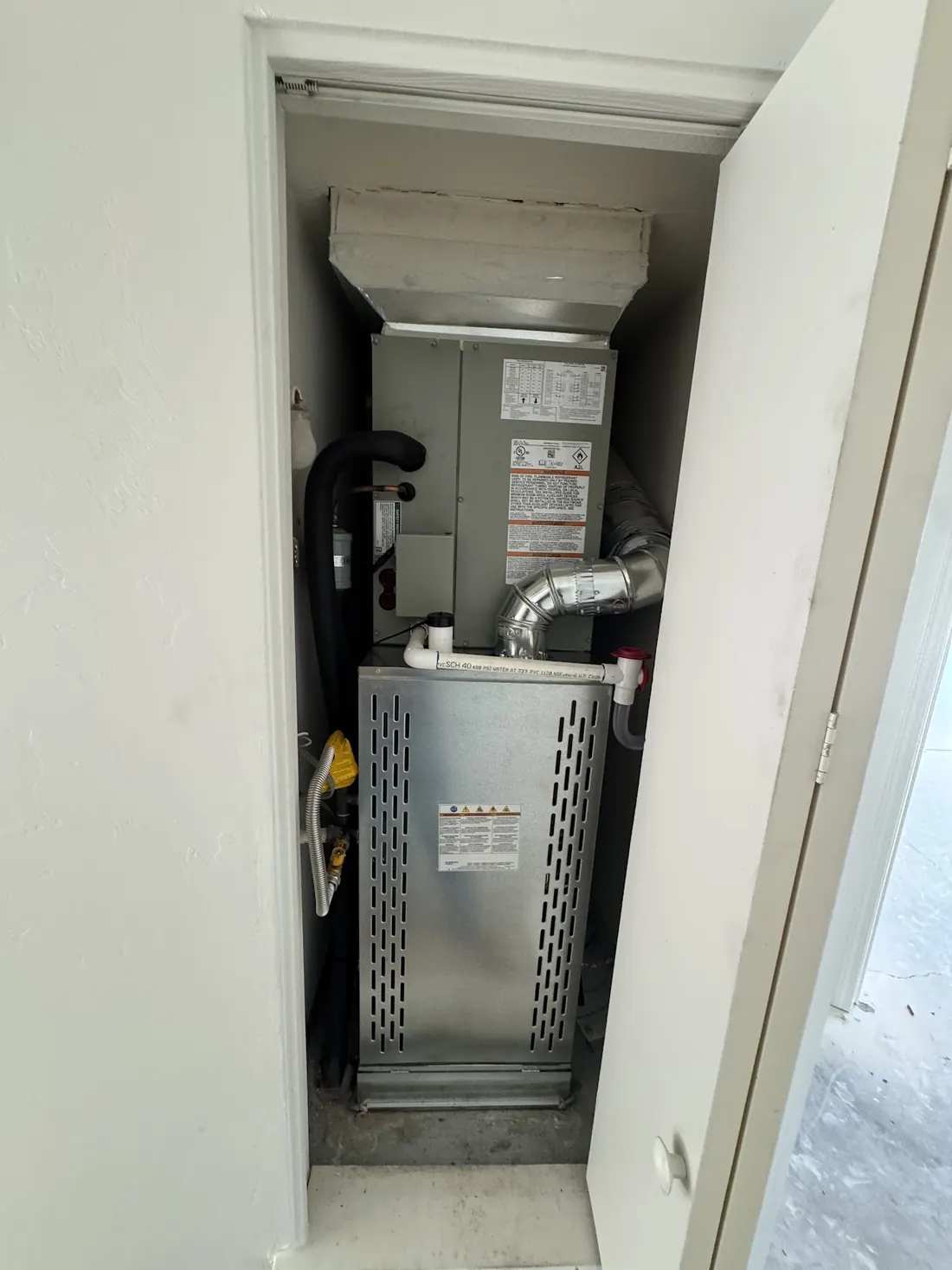
Furnaces in closets need air to burn properly. Packing the closet with storage or sealing it off can starve the furnace of air. Keep paint, cleaning products and other chemicals away from the furnace as well, and never block the louvers on a closet door.
Warning signs to watch for
- Your CO alarm sounds, even briefly
- Flu-like symptoms that get better when you leave the house
- A yellow or flickering burner flame instead of a steady blue one
- Soot or rust around the furnace, the vent pipe or the burner area
- Unusual moisture or condensation on windows near the furnace
- A furnace that keeps shutting off on its safety controls
Some of these have harmless causes, but none should be ignored. Our guide to signs your furnace needs repair covers other symptoms worth a call.
Carbon monoxide alarms: where and how
Every home with a gas furnace, gas water heater, gas range, fireplace or attached garage should have CO alarms. Follow the manufacturer instructions, and as a general rule:
- Put an alarm on every level of the home and outside each sleeping area
- Test alarms monthly with the test button
- Replace batteries at least once a year; testing them when you test the heat in the fall is an easy habit
- Replace the alarm itself when it reaches the end of life date printed on it
What to do if your CO alarm goes off
- Get everyone out of the house, including pets. Do not stop to open windows or look for the source.
- Call 911 from outside.
- Do not go back in until emergency responders say it is safe.
- Have the furnace and other gas appliances inspected before you use them again.
If you smell gas (a rotten egg smell), that is a different emergency: do not touch switches or the thermostat, leave the house and call Southwest Gas or 911 from outside.
How maintenance keeps your furnace safe
A fall heating check is about safety as much as comfort. During a gas furnace inspection, a technician typically looks at the burners, flame sensor, ignition and safety controls, checks the venting, and runs the system through a full cycle. Catching a dirty burner or a venting problem in October is far better than finding it on a cold January night.
The Cowboy Comfort Plan, from $175, includes two maintenance visits a year, one before summer and one before winter, so the furnace gets looked at before every heating season. See our fall maintenance checklist for what you can do yourself.
Repair or replace an unsafe furnace?
Some problems, such as a dirty burner or a loose vent connection, are straightforward repairs. A cracked heat exchanger is more serious, and on an older furnace it is often the point where replacement makes more sense. We explain what we find, show you the problem, and let you decide. If you are weighing a new system, a heat pump has no combustion in the home at all; our guide to heat pumps vs gas furnaces compares the two.
Get help
Arctic Cowboy repairs and maintains gas furnaces across Tucson and Southern Arizona, with 24/7 service for urgent problems. We are a family-owned company run by Brandon and Kelly Sill, licensed, bonded and insured (AZ ROC #359497), and rated 5.0 with more than 130 Google reviews. Call or text 520-633-9931, see our heating repair service or request service online.