You know the normal sounds of your home, so when the furnace starts making a new one, you notice. Some noises are harmless. Others are the first sign that a part is wearing out, and catching them early is one of the easiest ways to avoid an expensive furnace repair. Here is what the most common furnace noises mean in Tucson homes, which ones you can ignore and which ones need a technician.
Normal furnace sounds
A gas furnace goes through a short startup sequence, and each step makes a sound:
- A click from the thermostat or control board as it calls for heat
- The hum of the small inducer fan that clears the vent
- A quiet tick or click as the igniter warms up
- A soft whoosh as the burners light
- The steady sound of the blower moving air through the ducts
You may also hear light ticking from the ducts as they warm up and cool down. That is metal expanding and contracting, and it is usually harmless. On the first cold night of the season, expect a dusty smell for a few minutes too.
Banging or booming when the furnace starts
A loud bang or boom right as the burners light is the noise we take most seriously. It often means delayed ignition: gas builds up for a moment before it lights, then ignites all at once. Dirty burners, a weak igniter or gas pressure that is off can all cause it. Over time, repeated small ignition bangs can stress the furnace.
If you hear a bang at startup, turn the system off and have it inspected. A single pop or thump from the ductwork, on the other hand, is often the ducts flexing as air pressure changes, which is a smaller issue but still worth mentioning to your technician.
Squealing or screeching
A high-pitched squeal usually comes from the blower. On older furnaces, a worn or loose belt can squeal. On most newer furnaces, which drive the blower directly, the cause is often a motor bearing that is wearing out. The inducer motor can make a similar sound when its bearings fail.
A squeal tends to get worse, and a seized motor means no heat. Book a repair while the furnace still runs.
Clicking that repeats with no heat
One or two clicks at startup are normal. Continuous clicking, or clicking followed by nothing, is not. Common causes:
- The igniter is trying but cannot light the burners. The igniter may be weak or cracked, or gas may not be reaching the burners.
- The burners light and the flame sensor shuts them off. A dirty flame sensor is one of the most common heating repairs after the summer.
- A relay or control is failing. A clicking control board or thermostat that keeps switching on and off needs to be diagnosed.
Before calling, check that the thermostat is set to Heat and the filter is clean. Our heater troubleshooting checklist covers other safe checks.
Grinding or scraping
A grinding or scraping metal sound points to a motor with failing bearings, or the blower wheel touching its housing because something has come loose. Turn the furnace off. Running it can damage the motor or the blower, turning a smaller repair into a bigger one.
Rattling or vibrating
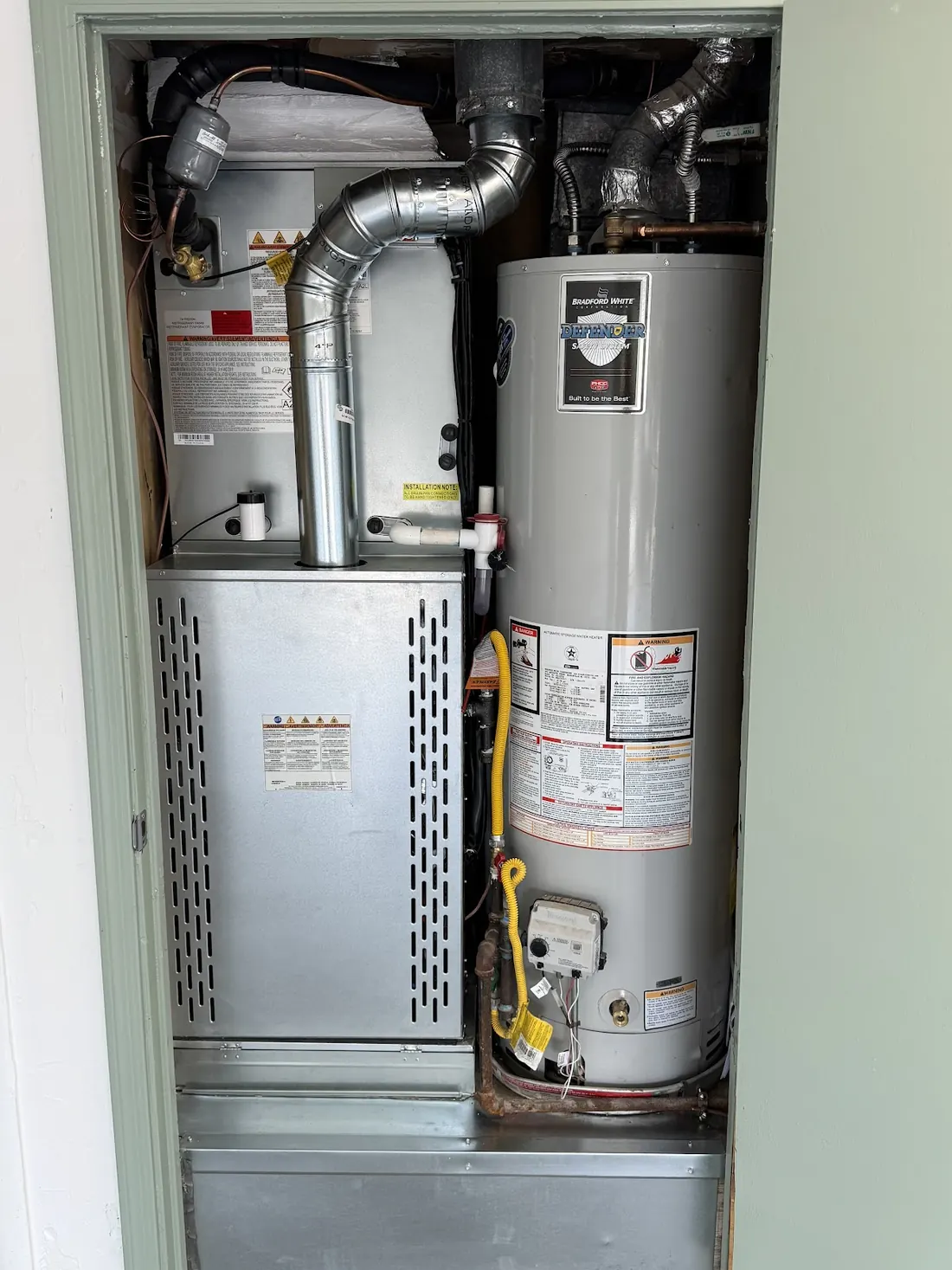
Rattles are often loose: a panel screw, a duct connection or a part inside the cabinet. Check that the furnace door is pushed firmly into place. If the rattle comes from inside the furnace and gets louder while it runs, have it checked, since a loose part can move into the blower.
Humming or buzzing
A low hum from the blower is normal. A loud buzz, or a hum with no movement, often means a motor that is trying to start and cannot, commonly because of a failed capacitor. The capacitor helps motors start, and it is one of the parts that most often fails at the start of a season.
Whistling
A whistle usually means air is being forced through too small a space. The most common cause is a clogged filter, so replace it first. Closed or blocked vents and returns can do the same, as can gaps in the ductwork. If a new filter does not fix it, the ducts may need a look. Leaky attic ducts cost you comfort as well as noise. “A lot of homes have ductwork running through the attic, and when those ducts leak, homeowners end up paying to heat spaces they aren’t even using,” Brandon Sill explains.
Rumbling after the furnace shuts off
A rumble that continues after the burners go off can mean burners that are dirty or a flame that is not burning cleanly. Treat it like a startup bang: turn the system off, check that your carbon monoxide detectors work, and have the furnace inspected.
Heat pump noises
If you heat with a heat pump, a whoosh and a short burst of steam from the outdoor unit on a cold morning is usually the defrost cycle, which is normal. Loud grinding, rattling or a unit that hums but does not run are not. Our guide to heat pumps that will not heat covers the common causes.
When to turn it off and call for furnace repair
- A bang or boom at startup
- Grinding or scraping metal
- Any noise together with a gas smell (leave the house and call Southwest Gas or 911 from outside)
- Any noise together with a burning or electrical smell
- Your carbon monoxide alarm sounds (get everyone outside and call 911)
How to keep a furnace quiet
Most noisy-furnace repairs start as small wear that a yearly check catches: a dirty burner, a weak igniter, a capacitor on its way out, a motor bearing starting to dry. The Cowboy Comfort Plan, from $175, includes two visits a year, one before summer and one before winter. Our fall maintenance checklist covers what you can do yourself.
Get help with a noisy furnace
Arctic Cowboy is a family-owned HVAC company in Tucson, run by Brandon and Kelly Sill, licensed, bonded and insured (AZ ROC #359497) and rated 5.0 across more than 130 Google reviews. We repair furnaces and heat pumps across Tucson, Oro Valley, Marana and Southern Arizona. Call or text 520-633-9931 or request service online.