Replacing a furnace is not something most homeowners do often, so it helps to know what happens at each step. This guide walks through a furnace installation in Tucson, AZ, from the first phone call to the first warm night, so you know what to ask and what a careful install looks like.
Step 1: Deciding whether you need a new furnace
Not every furnace problem means replacement. A dirty flame sensor, a weak igniter or a failed capacitor is usually a straightforward repair. Replacement starts to make sense when the furnace is older and repairs keep adding up, when a major part such as the heat exchanger or a motor has failed on an aging unit, or when the system never keeps the house comfortable.
An honest technician shows you what failed and lets you decide. If you are not sure, read our signs your furnace needs repair and our guide on when to repair or replace.
Step 2: The free in-home estimate
A furnace quote should come from a visit to your home, not a phone call. During a free in-home estimate we look at:
- Your current furnace, where it sits (closet, garage, attic) and how it is vented
- Your gas service, or whether the home has gas at all
- The ductwork, filter location and return air
- Your air conditioner or heat pump, since the furnace and cooling system work together
- Rooms that run too cold or too warm, and how you use the house
Step 3: Sizing the system correctly
Bigger is not better. An oversized furnace heats the house in short bursts, cycles on and off and leaves rooms uneven. An undersized one runs and runs on cold nights. The right size depends on the home: square footage, insulation, windows, sun exposure and where you live. Nights in Oracle, Vail or Sierra Vista are colder than in central Tucson, and that matters.
Brandon runs a load calculation before every install as an internal double check, so the recommendation is based on your house, not just on the label of the old unit.
Step 4: Choosing the right type of heat
A new gas furnace is not the only option. Many Tucson homeowners compare three setups:
- Gas furnace: warm air at the vents and strong heat on cold nights, usually paired with a separate air conditioner.
- Heat pump: one system that cools all summer and heats in winter, with no gas needed. “Here in Tucson, heat pumps are a great option because our winters are relatively mild, although gas furnaces can also be very economical,” Brandon says.
- Dual fuel: a heat pump paired with a gas furnace, so each one runs when it works best.
Our guide to heat pumps vs gas furnaces in Tucson compares them in more detail.
Step 5: Your written quote
A clear quote lists the equipment brand and model, everything included in the job (removal of the old unit, venting, gas and electrical connections, thermostat, any duct or return changes), the warranty and the total price. Arctic Cowboy works on transparent pricing with no hidden fees.
We install American Standard furnaces, heat pumps and air conditioners, with a 12-year compressor and 10-year parts warranty on qualified systems, and we are a Mitsubishi Electric Preferred Diamond Dealer, with a 12-year parts and compressor warranty on qualifying systems. Financing is available for qualified customers through Wisetack and Synchrony, and checking your options with a soft credit pull does not affect your credit. See how financing works.
Step 6: Installation day
Every home is different, and your written quote includes the timeline. A typical furnace replacement follows these steps:
- Protecting your home. Floors and work areas are covered, and the gas and power to the old furnace are shut off.
- Removing the old furnace. The old unit is disconnected and taken away.
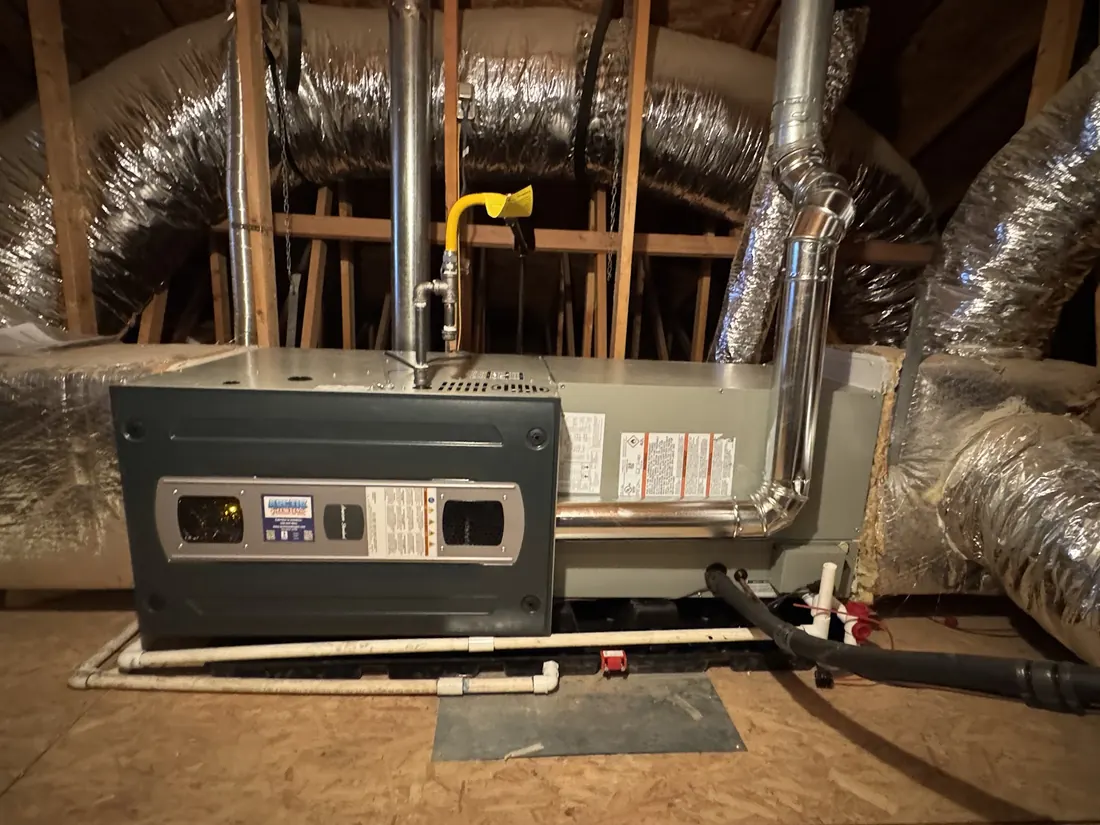
- Setting the new furnace. The new unit is placed, leveled and connected to the supply and return ductwork.
- Venting and gas. The flue or vent pipe is connected to suit the new furnace, and the gas line is connected and checked for leaks.
- Electrical and controls. The furnace is wired, and the thermostat is connected or replaced.
- Condensate drain. High-efficiency furnaces produce water, so a drain line is run where needed.
Step 7: Start-up and safety testing
This is the step that separates a careful install from a rushed one. Before we leave, the furnace runs through full heating cycles while we check ignition, burner flame, gas pressure, airflow, temperature rise across the furnace, the safety controls and the venting. We also make sure your carbon monoxide detectors work. If you have a heat pump or dual-fuel system, we test heating and cooling modes and the switch between them.
Step 8: First heat and walkthrough
We show you how to use the thermostat, where the filter goes and how often to change it, and where the service switch and shutoffs are. Expect a faint smell the first time the new furnace runs hard, as manufacturing oils burn off. It should fade quickly. We also register your equipment for the manufacturer warranty.
After the install: keep it running well
A new furnace still needs care. Change the filter regularly and have the system checked once a year before winter. The Cowboy Comfort Plan, from $175, includes two maintenance visits a year, one before summer and one before winter, plus priority scheduling.
The best time to replace a furnace in Tucson is fall or early winter, before a breakdown on the coldest night of the year forces the decision.
Get a furnace installation estimate
Arctic Cowboy is a family-owned HVAC company in Tucson, run by Brandon and Kelly Sill, licensed, bonded and insured (AZ ROC #359497) and rated 5.0 across more than 130 Google reviews. We install furnaces, heat pumps and dual-fuel systems across Tucson, Oro Valley, Marana, Vail, Sahuarita, Green Valley and Sierra Vista. Call or text 520-633-9931 or request service online.