When your air conditioner breaks down in the middle of a Tucson summer, the question comes fast: fix it again, or replace it? There is no single right answer, and an honest technician should help you weigh both options rather than push you toward the most expensive one.
Here are the seven signs we look at, a simple way to compare the numbers, and how to make a replacement easier on your budget.
1. Your system is getting older
Air conditioners in Southern Arizona run far more hours each year than systems in milder climates, so they tend to wear out sooner. Once a system passes the 10 to 15 year mark, it is worth planning ahead even if it still runs, so a replacement happens on your schedule instead of on the hottest day of the year.
Age alone is not a reason to replace. A well-maintained older unit can still have years left, and sometimes a thorough cleaning and a small repair is all it needs.
2. Repairs keep adding up
One repair in ten years is normal. Several repairs in the last two summers is a pattern. Keep your invoices: when the total you spend each year starts approaching a meaningful share of a new system, it is time to compare.
3. Your energy bills keep climbing
As systems age, efficiency drops. If your summer bills are rising year after year without a change in how you use your home, the AC is often the reason. Cooling is the largest part of most Arizona power bills, which is why efficiency matters so much here.
4. It uses R-22 refrigerant
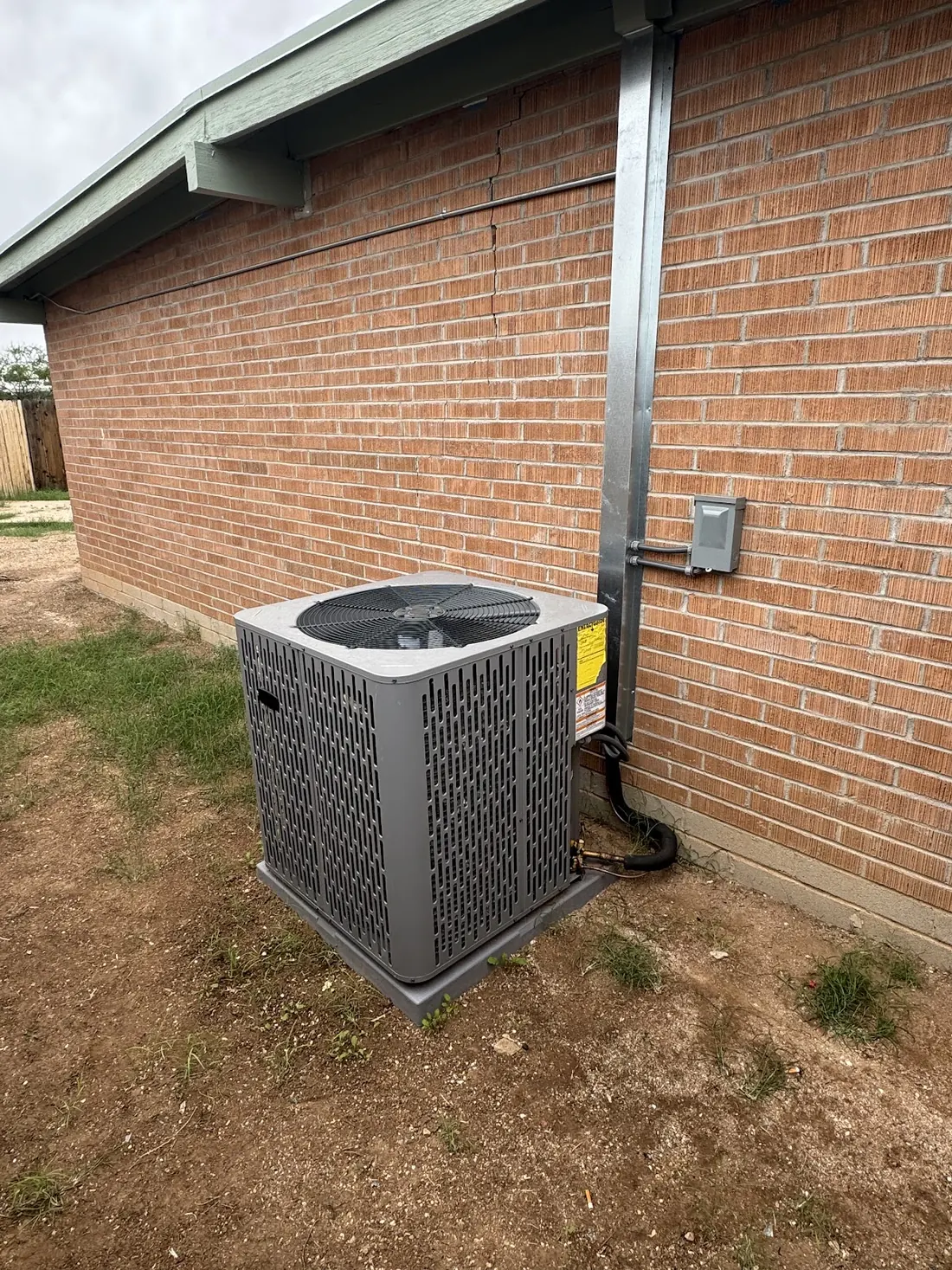
Systems installed before about 2010 often use R-22 (sometimes called Freon). Production of R-22 ended in the United States in 2020, so recharging a leaking R-22 system has become expensive and is only a short-term fix. If your system uses R-22 and has a leak, replacement is usually the better investment. Your technician can check the label on the outdoor unit.
5. Some rooms are too hot, or the house feels humid
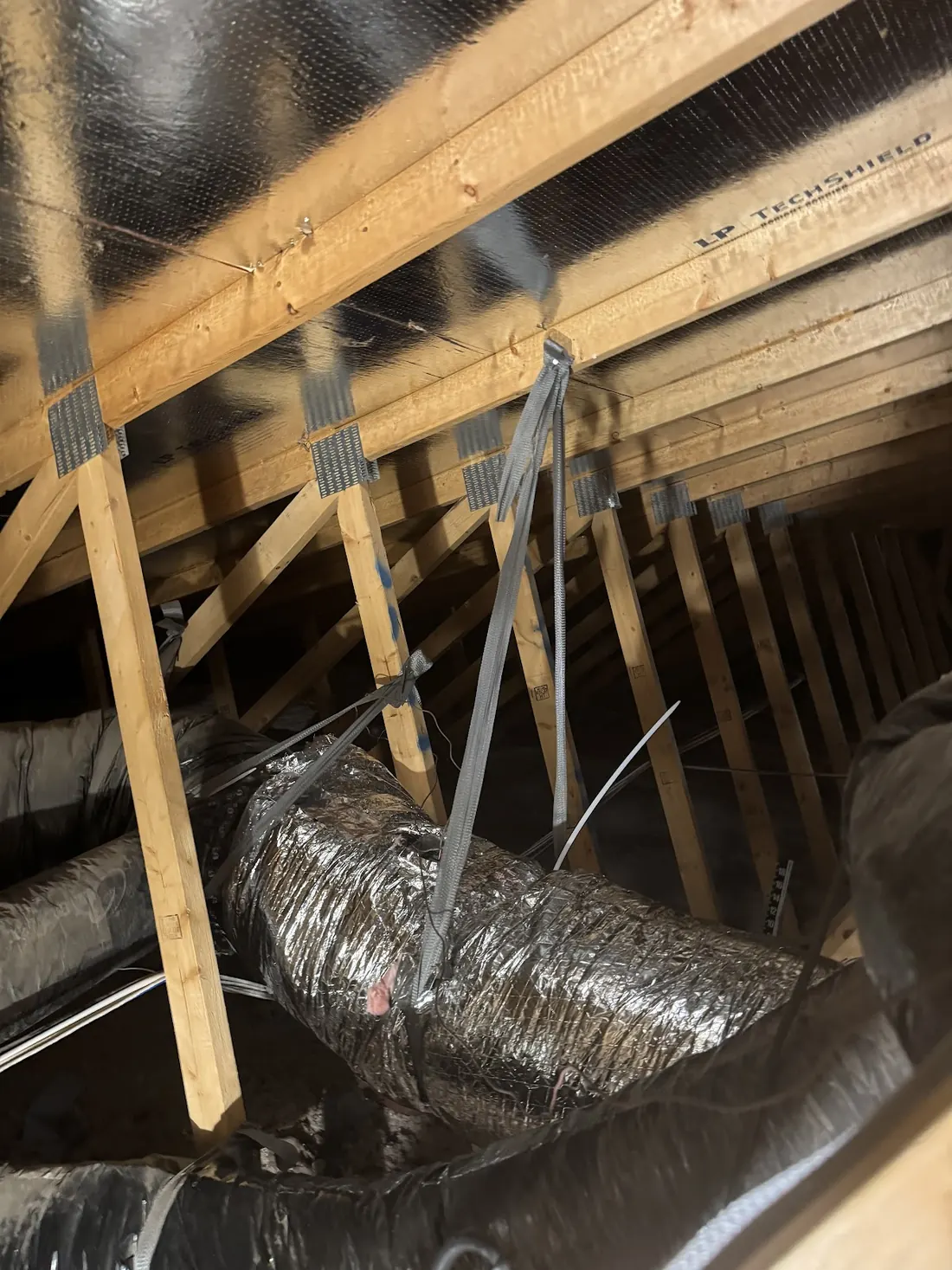
Uneven temperatures, a house that never quite reaches the thermostat setting in the afternoon, or a sticky feeling during monsoon season can point to a system that is worn out, undersized or has airflow problems. Sometimes the fix is ductwork or a zone; sometimes it is a properly sized new system.
6. Strange noises, smells or short cycling
Grinding, banging or loud buzzing, burning smells, or a system that turns on and off every few minutes are warning signs. Some are simple repairs; others, like a failing compressor, are expensive enough on an older unit that replacing makes more sense.
7. A major component has failed
A failed compressor or a leaking coil on an older system is often the tipping point. These repairs cost a significant amount, and you are still left with an old system around the new part.
A simple rule of thumb: the $5,000 rule
Many HVAC professionals use a quick formula: multiply the age of your system by the repair cost. If the result is above about $5,000, replacement usually makes more financial sense. If it is below, repair is often the smart choice.
Example: a 14-year-old system with a $450 repair gives 14 × 450 = $6,300, so it is worth getting a replacement quote. A 6-year-old system with the same repair gives $2,700, so repair it.
It is only a starting point. Efficiency, refrigerant type, warranty coverage and how long you plan to stay in the home all matter too.
What a new system can change
Newer high-efficiency systems, especially variable-speed models, adjust their output to what your home needs instead of running at full power all the time. They use energy more efficiently, keep temperatures steadier and run more quietly. How much you save depends on your home, how well it holds temperature and how you use your system, so we walk you through the efficiency options rather than promise a number.
When repair is the right call
Replacing is not always the answer. If your system is fairly young, the repair is reasonable and the rest of the system is in good shape, repair it. One of our Google reviewers, Robert, put it this way: Brandon was “interested in getting the unit working efficiently, not trying to sell me a new one.” That is how we work: we only recommend what your system truly needs.
Making a replacement easier
- Free in-home estimate. We show you the options side by side, including the manufacturer and model choices that affect the price, and give you a written quote with no hidden fees.
- Long warranties. Qualifying Mitsubishi Electric systems come with a 12-year parts and compressor warranty, and qualified American Standard systems with a 12-year compressor and 10-year parts warranty.
- Financing. 0% deferred interest and other terms through Wisetack and Synchrony for qualified customers, with a soft credit check to prequalify. Learn more about financing.
- Plan in the cooler months. Fall and winter are the easiest times to replace a system: no emergency, more scheduling flexibility, and you are ready before next summer.
Talk to a local, honest HVAC team
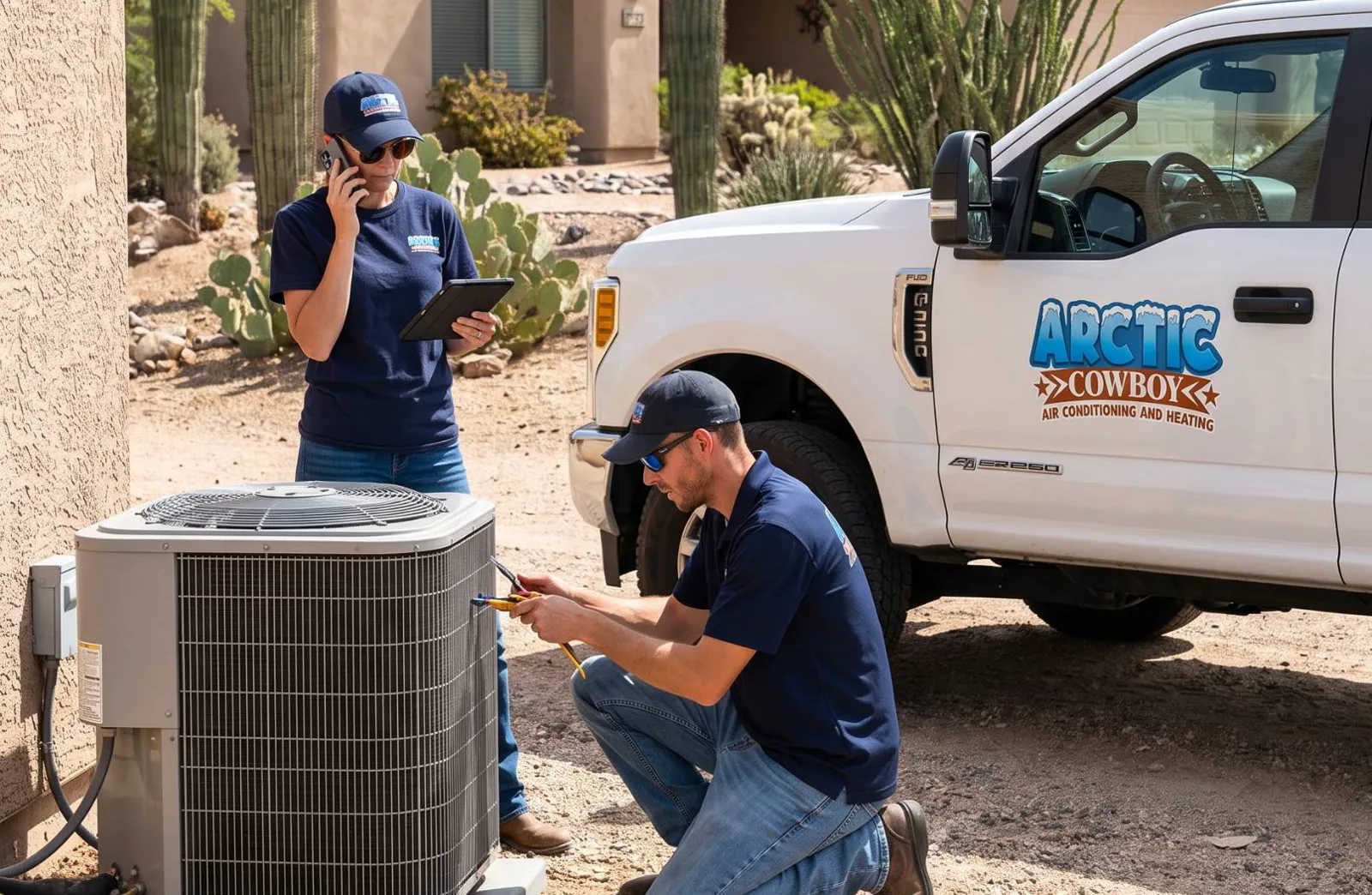
Arctic Cowboy is a family-owned HVAC company in Tucson, run by Brandon and Kelly Sill. We are licensed, bonded and insured (AZ ROC #359497), BBB accredited with an A rating, and rated 5.0 across 121 Google reviews. We install American Standard and Mitsubishi Electric systems and service all major brands across Tucson and Southern Arizona. Call or text 520-633-9931 or request a free estimate.