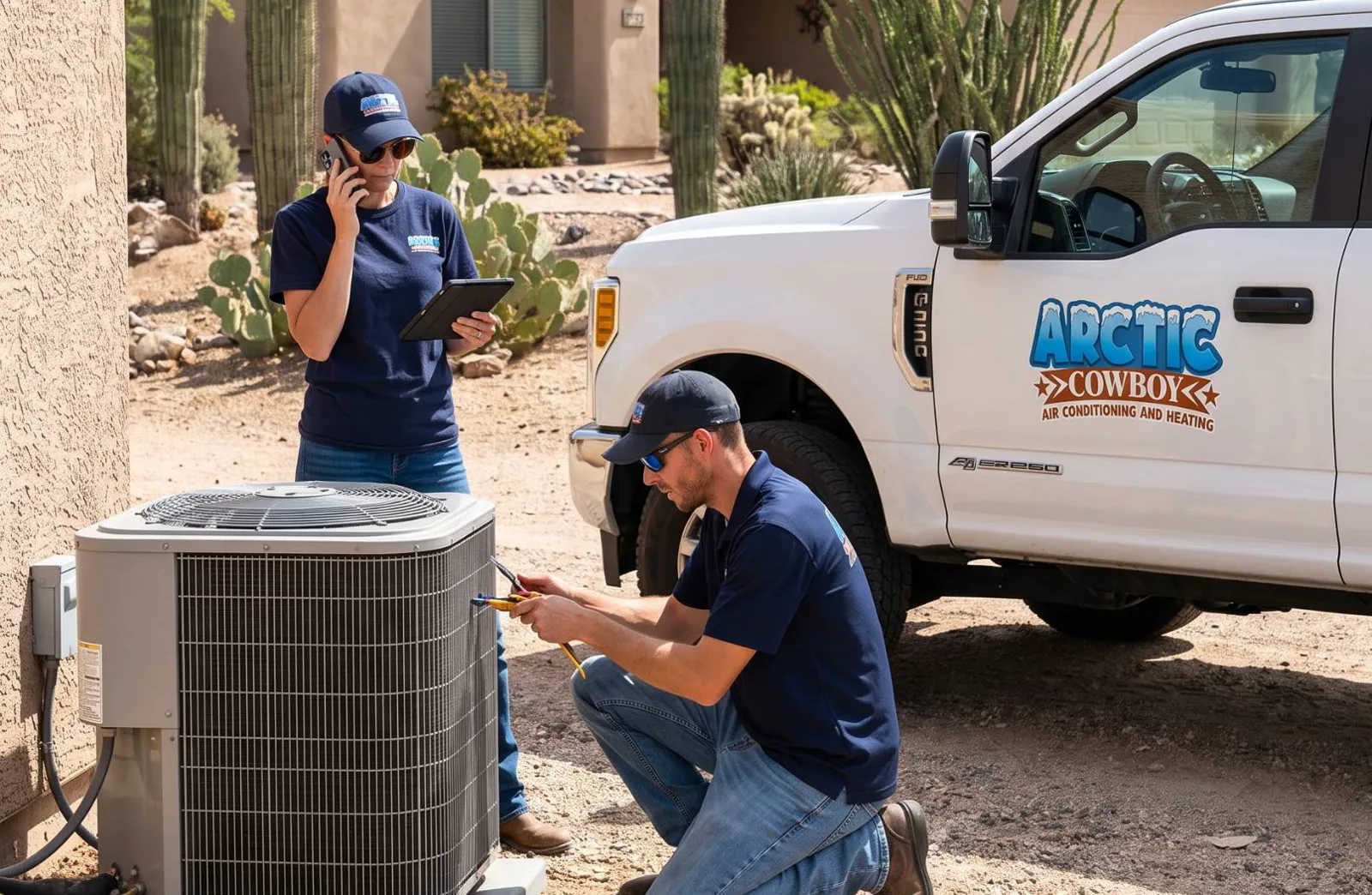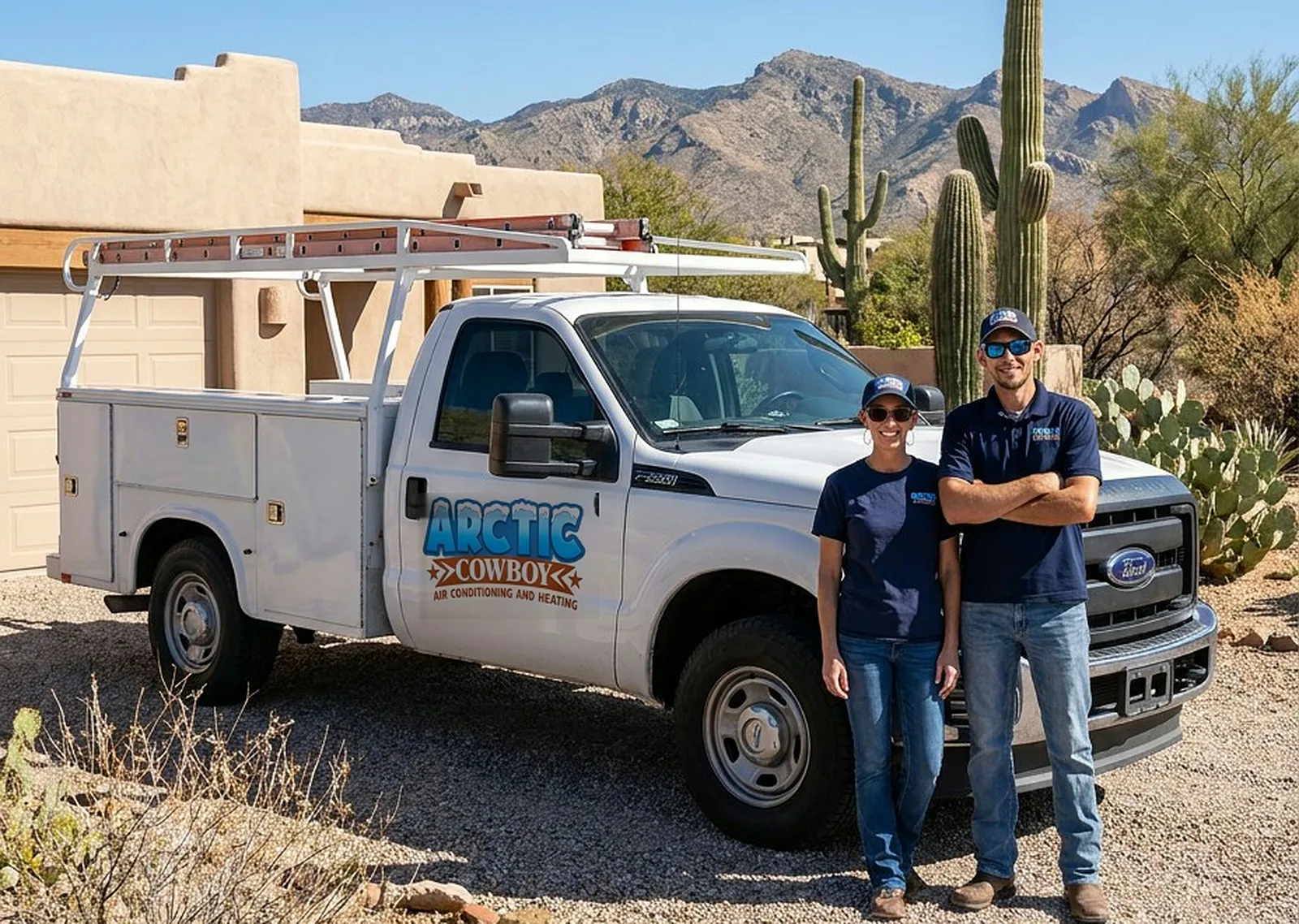
Tucson winters are mild compared to most of the country, but the first cold nights still bring a surprise for many homeowners: a higher utility bill. We asked Brandon Sill, co-owner of Arctic Cowboy Air Conditioning and Heating, what really drives those costs and what homeowners can do about it.
What drives your winter heating bill
According to Brandon, three things matter most: how efficient your heating system is, how well your home holds heat, and the temperature you keep on the thermostat.
The type of system matters too. “Here in Tucson, heat pumps are a great option because our winters are relatively mild, although gas furnaces can also be very economical,” Brandon says. Homes that heat with electric resistance heat, such as baseboard heaters or older electric furnaces, usually pay more because those systems use more electricity to make the same heat.
Not sure which you have? Read our guide to heat pumps vs gas furnaces in Tucson.
How to estimate your bill before it arrives
You do not need a calculator to get a good idea. Brandon's tip: pull up your utility bills from last winter and compare them with a month when you were not running heat or air conditioning, such as April or late October. The difference is roughly what heating costs you.
Keep in mind that a colder winter or a change in utility rates will move that number up or down.
Common problems that waste heat
When a heating bill jumps, there is usually a reason. These are the issues Brandon sees most often in Southern Arizona homes:
- Dirty air filters. A clogged filter restricts airflow and makes the system run longer.
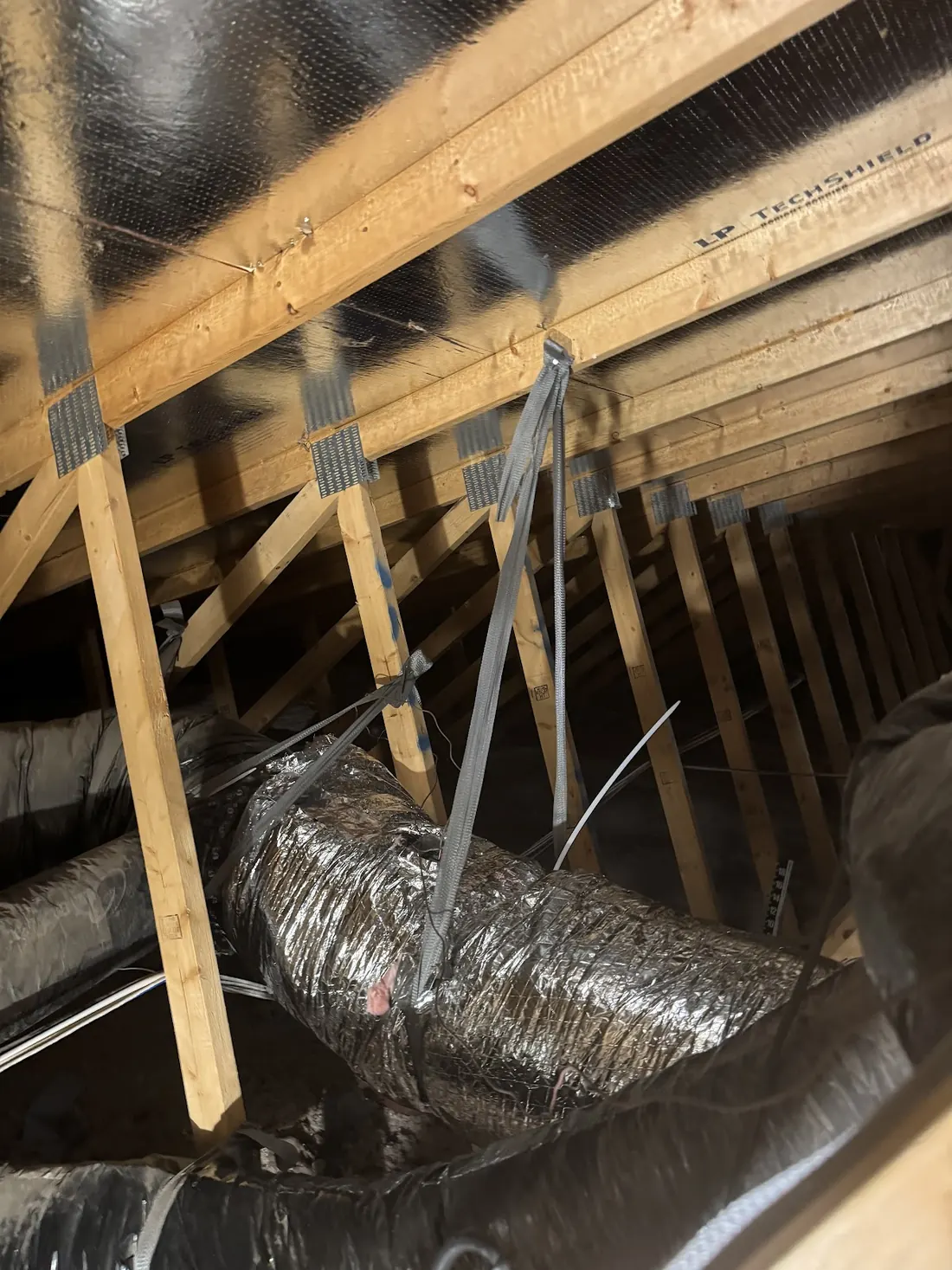
- Leaky ductwork. “A lot of homes have ductwork running through the attic, and when those ducts leak, homeowners end up paying to heat spaces they aren’t even using,” Brandon explains.
- Poor insulation. Heat escapes through the attic, walls and around doors and windows.
- Skipped maintenance. Systems that have not been serviced often have restricted airflow or mechanical issues that make them run longer than necessary.
Low-cost fixes that make a real difference
Before thinking about a new system, start with the basics:
- Change your air filter. Check it monthly in winter and replace it when it looks dirty.
- Adjust your thermostat. Turning the temperature down a few degrees while you sleep or when nobody is home is one of the easiest ways to use less energy. A programmable or smart thermostat does it for you.
- Seal drafts. Weather stripping around doors and caulk around windows are inexpensive and quick to install.
- Keep up with maintenance. A fall check makes sure the system runs efficiently and catches small problems early.
“I’d start with the basics,” Brandon says. “Those are inexpensive things homeowners can do themselves that can help reduce energy waste.” And if the heat is not working the way it should, he recommends having it checked sooner rather than later, “because a small problem today can turn into a much more expensive repair down the road.” Our heater troubleshooting checklist covers what you can safely check yourself.
When a bigger upgrade makes sense
If your system is getting older, breaking down often or costing more to run than it should, it may be time to look at an upgrade. Replacing an older electric resistance system with an efficient heat pump, for example, can significantly reduce the electricity used for heating, although the actual savings depend on the home and the installation.
Brandon also recommends looking beyond the equipment: sometimes sealing ductwork or improving insulation gives homeowners a better return than replacing the system. Read more about when to repair or replace, and about financing options for qualified customers.
Get your heating checked
Arctic Cowboy is a family-owned HVAC company in Tucson, run by Brandon and Kelly Sill, licensed, bonded and insured (AZ ROC #359497) and rated 5.0 across more than 130 Google reviews. The Cowboy Comfort Plan, from $175, includes two maintenance visits a year, one before summer and one before winter. Call or text 520-633-9931 or request service online.